
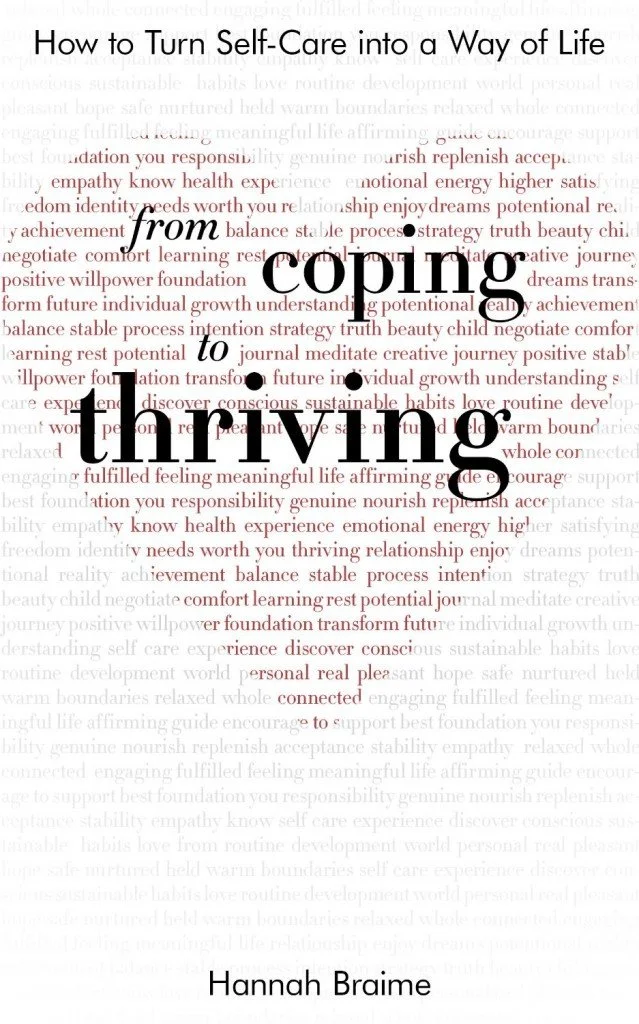
Over the last 10+ years since From Coping to Thriving: How to Turn Self-Care Into a Way of Life was released, I’ve had multiple emails from people who planned to read the book as part of a book club. One of the things I love most about writing is discovering that a book I wrote alone has become something people experience together, whether in pairs, small groups, or larger discussions.
If you’re reading From Coping to Thriving with a book club, a friend, or a small group, this week I want to share some questions you can use to frame your conversation and think in more depth about how the book might apply to you and your lives.
Some of the questions are about specific practices in the book while others are a jumping-off point for deeper conversations about general themes and topics. Pick your favourites or the questions that speak to you and see how the conversation unfolds :)
The book states that 80-90% of self-care is an “inside job.” It’s about how we interact with ourselves, process information, and deal with internal conflicts more than it’s about external activities. How does this challenge the version of self-care you were raised with, or that you see promoted most often?
The book draws a clear line between self-care (identifying and meeting underlying needs) and self-indulgence (feeling good in the moment, possibly at the expense of other/future needs). Can you think of something in your life that you’ve called self-care but that might have actually been self-indulgence? What did you notice about the difference in how it left you feeling?
The book talks about coping strategies and uses the image of putting a plaster (or band-aid) on a wound that really needs stitches to describe the effects of this. What coping strategies do you recognise in yourself, and what deeper wounds or needs do you think they might be covering?
The book describes a Catch-22, where we feel we need to be worthy before we engage in self-care, but we only start to feel worthy once we do. Where do you recognise this pattern in your own life?
Jennifer Louden’s concept of “shadow comforts” is discussed (behaviours that look like self-care but don’t actually meet our needs). What do you think makes a shadow comfort feel so convincing in the moment? And why do you think it’s often harder to reach for genuine self-care when we’re at our most depleted?
The book explores how words like “should,” “must,” and “need to” in relation to self-care activate shame rather than movation and can turn a nurturing practice into another item we feel we’re failing at. When you notice yourself “shoulding” around self-care, what kinds of things does your internal critic typically say?
Drawing on Brené Brown, the book distinguishes between guilt ("I did something bad") and shame ("I am bad"). Shame is described as self-perpetuating: the more we use it on ourselves, the less worthy we feel, and the less able we feel to change. How does shame show up when your self-care practice falters, and how does it make starting again harder?
The book describes the "all or nothing" approach to habits (e.g. launching into a five-day-a-week exercise schedule before giving up after ten days) and argues that "the biggest killer of new habits is ambition." Why does starting small feel like failure even when it's more likely to lead to lasting change?
The book argues that meeting our own needs sometimes requires asking other people for support, and that being assertive about what we need is one of the most vulnerable things we can do. What gets in the way of asking for what you need from the people closest to you?
The book's final reflection, "What does your best self look like to you?" is planted as a seed early and revisited throughout. Having read the whole book, how has your answer to that question shifted? And what is one thing that would change in your life if you took that vision seriously?
I hope you enjoy the book and discussing these questions!