How to Deal with Creative Anxiety
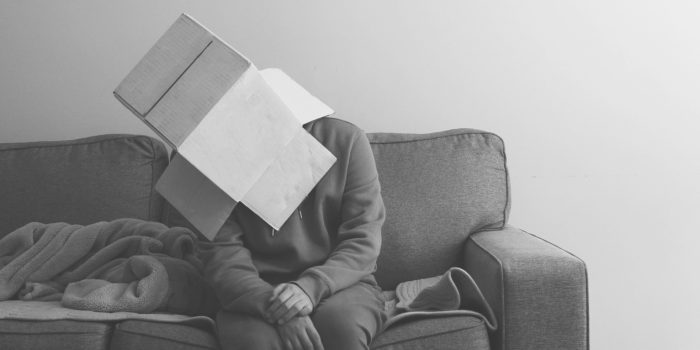
This is a post I've wanted to write for a while; it's something I have experienced a lot myself and it's one of those topics that underpins so much of what creatives can struggle with in their work. Creative anxiety is a common experience, but if you're not sure how to approach it, it can be something that causes additional stress, derails entire projects, and affects your sense of self-confidence in the longer term. What makes creative anxiety distinct from everyday nerves is that it becomes chronic and impacts how you make and share your work: it's resistance, avoidance, and self-doubt showing up around creative work over a longer period of time.
What is creative anxiety?
Creative anxiety can manifest in different ways, all of which can be pretty personal, but some of the more common experiences include:
Perfectionism: holding our work to an impossibly high standard
Fear of judgment: concerns and worst-case scenarios about what will happen when we share our work publicly
Blank page paralysis: feeling overwhelmed by having too many decisions and too few constraints
Imposter syndrome: the sense that you're not really that good, and one day people are going to realize it
“Expert" expectations: feeling like you need to have done all the classes, all the trainings, gotten all the degrees, and reached the top of your field before you can start sharing your work or call yourself a creative
Like I wrote about stress and pressure a couple of weeks ago, nerves and anxiety run on the same continuum. Research suggests that some nerves can enhance creativity and our performance. This is called the Yerkes-Dodson law and, similar to Mihaly Csikszentmihalyi's concept of flow, it's based on the idea that there is a sweet spot between boredom and overwhelm or over-arousal. That's where the magic happens.
Creative anxiety, however, is important to be aware of, because that's not where the magic happens. Creative thinking is associated with something called the Default Mode Network, interconnected regions of our brain linked to day-dreaming, remembering the past, imagining the future, and so on. Anxiety activates our amygdala, another area of our brain, which among other things, drives our fight-or-flight response. This pulls our attention away from mind wandering toward salient emotional or external threats, affecting our ability to think creatively.
We all dip in and out of these states every day; that's part of being human. Where we need to pay extra attention to these experiences, however, is when they start to interfere with our work and/or our general wellbeing. Feeling nerves is normal, those nerves preventing you from creating or sharing the work you want to create or share deserves some extra care and attention.
Practical strategies for dealing with creative anxiety
Below, you can find a quick overview of simple yet effective ways you can start addressing creative anxiety. These are designed to be things you can do at home, by yourself. I do want to emphasise, however, that these suggestions are related to the emotional experience of anxiety, not anxiety in the clinical sense. Also, I am not sharing these with the implicit message that you should be able to deal with creative anxiety all by yourself, with no support. Sometimes, an external perspective can be deeply helpful with this kind of thing, whether that is from a trusted friend or family member, a coach, or a mental health professional. So please consider these a starting point, rather than "the solution" :)
1. The “experiment” reframe
This is one for the fellow perfectionists out there (hi!). Anxiety often comes from how we view or interpret a situation, rather than the facts of the situation itself, which is heavily influenced by our internal dialogue and beliefs. If we feel like a project needs to be perfect before we can share it publicly, that process of sharing is going to be much more anxiety-provoking (and maybe not even happen at all), compared to how it might feel if we shift our perspective and ease off the pressure.
Something I've found helpful is shifting thoughts like "this has to be good/successful/flawless" to thinking of creative work more like an experiment. What happens if I do X? What would I make if no one were to see it? What if I just put this out there and see what happens?
Feedback feels personal, but it's really just data. While it sounds counter-intuitive, taking the emotion out of making and sharing our work, adopting an "I wonder what happens if I do X?" attitude, and viewing it almost like a lab experiment, can help relieve some of the internal pressure. And, you never know, the results might surprise you!
2. Step outside yourself
There are two related tricks here, and they both work by putting a little distance between you and the anxious thought, rather than accepting it unquestioningly as the truth.
The first is based on the work of psychologist Ethan Kross, who writes about this in his book, Chatter. His research suggests that referring to yourself in the third person, or imagining how you'd advise a friend, reduces emotional intensity and improves decision-making. Try asking, "What would I tell a friend who felt this way?" Or a version I like: "What would my 80-year-old self say about this?"
The second is more about your relationship to the thought itself. We can't necessarily get rid of anxious thoughts, so one way of thinking about it is that you want to play the role of audience member rather than taking part in the production. Changing a thought like "this is terrible" to "I notice I'm having the thought that this is terrible" is a subtle shift, but it creates psychological distance. Your brain can have lots of opinions about you, your work, and what it all means, but that doesn't mean it's right, and you don't have to believe it.
3. Set process goals before outcome goals
When it comes to goal-setting, most of us focus on outcome-based goals: finish the chapter, create three sketches, win an award. The issue with outcome goals is that they can feel exciting initially, but they can also become anxiety-provoking because they are only partly within our control or influence. A different kind of goal, and one that is much more aligned with calm, productive creating, is a process goal. This is about the effort, not the result. It's writing for 20 minutes, incorporating three different techniques in your sketching, submitting your work to a certain number of outlets in any given year. These goals are more helpful because they are fully within your control. You're not waiting for the stars to align or for permission from anyone else—all you need to do is show up.
4. The “shitty first draft”
This concept, coined by Anne Lamott, is about giving yourself permission to start with something, however bad we think it is. It's based on the idea that making something is better than making nothing at all, and, to use a phrase I've heard related to writing, "You can't edit nothing." As Lamott points out, we see successful writers and "…think that they sit down at their desks every morning feeling like a million dollars, feeling great about who they are and how much talent they have and what a great story they have to tell." (From Bird by Bird.) As she goes on to elaborate, this is an illusion: creative journeys look very different for each individual, and they are rarely effortless, or even that enjoyable. But the first draft is almost like a way to get through the bad stuff to the gold that lies underneath.
Don't let anxiety take the wheel
When we feel anxious, our instinct is to avoid whatever's triggering it. But avoidance doesn't make the anxiety go away. In fact, it usually reinforces it, making the next attempt feel even more threatening. The more you avoid your creative work, the bigger and scarier it can feel.
That's what these suggestions are based on: shifting perspective so the feelings become manageable and we can move forward regardless. If you wait until you feel "ready," it's probably never going to happen. But small, low-stakes, consistent actions can make the fear shrink over time. It's healthy to acknowledge that you're feeling creative anxiety, and it's allowed to be a passenger on your creative journey—you just want to make sure that it's you, not your anxiety, behind the wheel.
Ultimately, feeling anxious about your creative work can be a really good thing: it's almost always a signal that you care and this work matters to you. In that sense, anxiety, as uncomfortable as it can be, is useful information. At the same time, not every strategy for dealing with creative anxiety is going to work for everyone, so I invite you to keep an open mind, keep trying, and most importantly, keep creating :)
I hope this was helpful!