Stress versus Pressure (and why it matters for your creative work)
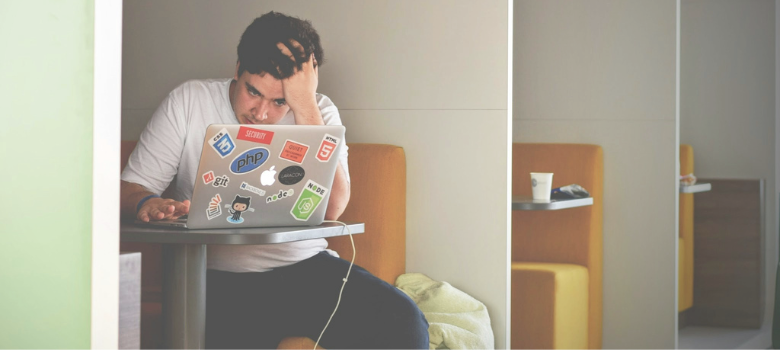
It’s time to write. You open up the document. The cursor blinks away. No words come.
It’s two days before a big deadline. You’ve known this deadline was coming for months, but you’re behind and playing catch up. It’s down to the wire.
You say yes to a project that is big—the biggest you’ve ever taken on. As the initial elation wears off, the fears start to creep in. How are you actually going to do this? Can you even pull it off at all, let alone do it well? What have you just agreed to? You feel way in over your head.
All these scenarios have one thing in common: stress.
We're used to hearing that too much stress is bad for us: for our health, for our emotional wellbeing, and for our work. Reducing stress is a good thing, right?
But something I’ve found in my own experience and talking to other creatives is that this uncomfortable feeling is is not necessarily harmful: it can actually be helpful. A lot of this is contextual. The blank page/looming deadline/big project scenarios above might be motivating to one person, while someone else might get a sinking pit of dread in their stomach just thinking about them.
Pressure versus stress
I think these scenarios can be experienced in different ways because there is a difference between pressure and stress. These things exist on a continuum and there is a thin line between them that can sometimes be hard to identify until you’re over on the wrong side of it, but being able to identify the difference between these two things and try to stay on the right side of that line can have huge benefits for our creative work.
Pressure is a response to something that matters, typically something important. It’s a deadline, a creative goal, an opportunity that usually comes with a tinge of excitement attached. It’s time-limited and tied to specific outcome.
There is a psychology principle called the Yerkes Dodson law, which states that performance improves with “moderate arousal.” In plain terms, that means being somewhat nervous about something means you’re likely to do a better job at it. The right amount of adrenaline can sharpen our focus and improves performance. But moderate is the defining word here: if that arousal level becomes too low (boredom), or too high (stress!), performance decreases. How and when this manifests differs from person to person, but the general principle is that everyone has their sweet spot, where feeling just a bit nervous, worried, or anxious about something is good for our performance.
This is pressure. It might feel uncomfortable, but it’s not harmful—actually, it’s the opposite. When we feel pressure, it’s our mind’s way of saying “this is important.” It’s when we experience this as a threat, rather than simply as information, that it can tip over into stress.
Stress, on the other hand, has a different quality. For a start, it often compounds over time. Whereas pressure tends to be finite, stress often exists outside of temporal boundaries. It’s just there, whatever is going on.
I think of it as pressure gone bad: you are out of internal resources, your nervous system feels dysregulated most of the time, and even your best effort feels like it’s barely scratching the surface. Nothing is enough. While the right amount of adrenaline can enhance performance, too much can affect fine motor control, accuracy, breathing and decision making, meaning we are more likely to make mistakes or exhibit poor judgement. Stress has a very real effect on our physical and mental health, plus our work, including issues with memory, decision fatigue, and creative blocks.
Why Pressure versus stress matters for creatives
Creatives are especially vulnerable to conflating the two. Your work is meaningful to you, it’s something you put a lot of time and thought into, it can often feel personal. Then, there are frequently self-imposed goals or deadlines.
Both these aspects can work for you or against you. In the context of pressure, doing meaningful work can sharpen your focus and output. Adding constraints, deadlines or an audience can generate a kind of energy that doing work just for yourself doesn’t. But stress triggers the inner critic, stifles your creative spirit, and makes everything feel both extremely urgent and impossibly unattainable all at the same time.
It might be tempting to want to get rid of this discomfort altogether and have an easy breezy creative life, but in doing so, you’ll probably dull your performance somewhat and deaden that “edge” that the right kind of pressure gives you. The key is regulation.
Staying in “the pressure zone”
There are a couple of things that can help keep you on the right side of the pressure/stress line.
The first is mindset. Professor Alison Wood Brooks has an interesting reframe for times when we’re feeling anxious or nervous about something, sharing that people who can reframe feelings of anxiety as excitement perform much better than those who don’t. The difference, as she describes it, is between seeing the situation as an opportunity (pressure) and as a threat (stress). Even saying to yourself “I am excited!” can help with this reappraisal.
Another form of this reappraisal that works well for bigger projects is focusing on the progress as well as how much there is still to be done (I use this a lot when writing books and while doing my masters). We are naturally wired to focus on potential threats and problems, but this can work against us if we dwell on this at the expense of recognising how much progress we have made and how capable we are. Like the technique above, this doesn’t have to be complicated. Even saying to yourself “Look at all the progress I’ve made so far” or similar can help keep that threat signal at bay and keep you in the pressure zone.
In the case of chronic stress, productivity doesn’t matter as much as rest, boundaries around work, and focusing on nervous system regulation. As the saying goes, you cannot pour from an empty cup, and it might be that you need to take a step back from something (or multiple things) while you give yourself time to heal and figure out what having a sustainable relationship with these things looks like.
The TLDR takeaway is this: you don’t have to be calm to do good work, but you do have to be regulated. The goal isn’t to feel no pressure (I’m not even sure that’s realistic?), but it’s to be mindful of not letting pressure tip over into stress without realising.
As you start to think about the difference between pressure and stress in your own life and work, I invite you to consider:
Can you think of a time when you experienced pressure? And can you think of a time when you experienced stress?
How did these two experiences feel different?
How did they show up in your body differently?
Was your internal dialogue different?
How did you feel about your performance afterwards?
What helped you feel more regulated?