

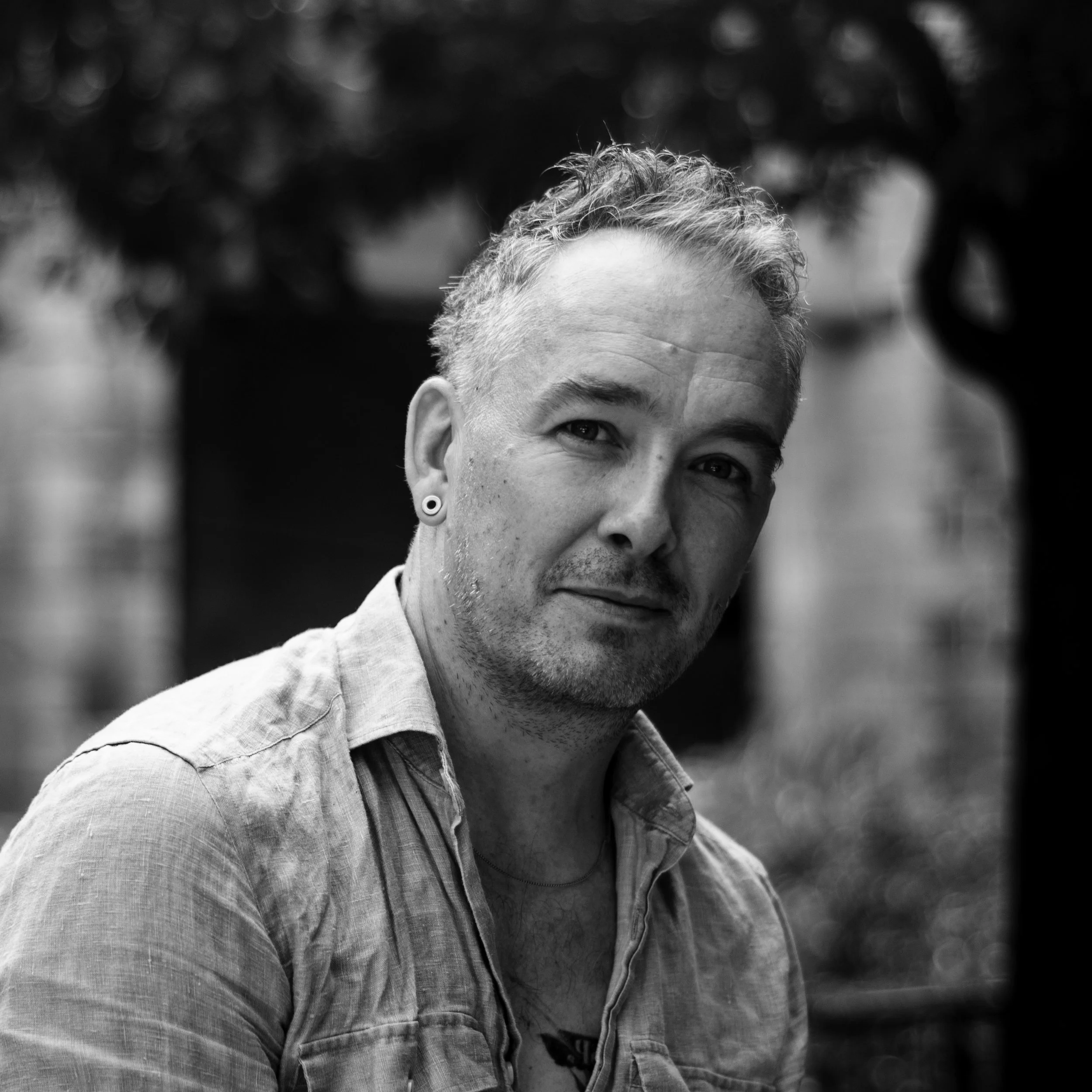
This week, I’m delighted to share an interview with Oliver Mann, author of Shadow Journaling: A Field Guide to Personal Alchemy and The Shadow Journaling Integration Workbook: A 12 Week Guided Journal for Shadow Work and Deep Self-Discovery.
Oliver created Shadow Journaling after feeling frustrated that so much journaling advice never gave the depth he needed. Through studying Jung, Robert Johnson, Debbie Ford, Nathaniel Branden, Kay Adams, and Gloria Kempton, Oliver found a thread that helped him, and later his students, go gently into the shadow, with a light, with support, and the confidence that we will grow.
Shadow Journaling is about listening to the unheard you.
1. Can you introduce yourself and tell us a bit about your journaling journey so far?
I’m Oliver and I’m a journaling junkie. In all fairness, that’s probably quite true now - I journal almost every day, and the days I don’t, it feels like something is a little off.
Journaling started off as a release valve for when my mental pressure got too high. It started through the medium of fiction. I would write a lot about depressed young men sitting in bars. Although none of it was of literary quality, it did help me process and externalise a lot of what was going on inside.
2. Please give a brief introduction to shadow journaling for those who might be new to the concept.
Shadow Journaling is using writing to move from self-awareness and into self-acceptance. This shift is probably the most important one we can do in our own journey. Driving towards self-awareness is the easy part. Starting to accept the aspects of ourselves we don’t like is where the discomfort starts kicking in. And, where the saying says “life begins on the other side” of.
3. How did you become interested in shadow journaling, and how do you feel it has influenced your life?
Shadow Journaling is something I put together as an idea after reading the idea of Jung’s psychological alchemy. I’d been doing a lot of shadow work myself at this point. When I dove into the process of journaling into the shadow, with intention and with a clear outcome, I realised it was something I couldn’t find anywhere else.
I know how much I’ve been in search of self-awareness in the hope it will miraculously fix my broken self. Once I could move through that and start taking radical ownership of my life, I started to see a real difference in how I would show up for myself and for others.
If I were to look at a single inflection point in my personal journey, the realisation that self-awareness only opens the door to self-acceptance would be it.
4. You mention the difference between having self-awareness and actually doing something about it through changing behaviour. What has helped you do this in your own life?
One of key aspects of this process for me was when I realised how much I was fighting parts of myself, and at the same time secretly enjoying having them around. On the one hand I was trying to get rid of something, on the other hand I was happy to have it around. It was a situation I couldn’t win.
Once realised that, and could start the process of letting that part of myself into the fold, it made it possible for me to actually change the way I saw myself.
5. I loved this paragraph: “To reveal who is hiding behind the ego, you need to be willing to accept that there’s more to you than you previously thought. A lot of that is going to be uncomfortable, shameful, embarrassing. And a lot is also going to be positive, like rediscovering your creativity, your voice, your openness to life.” I think a lot of us want the latter, but shy away from the former. What would you suggest for getting comfortable with aspects of ourselves we might find uncomfortable or even shameful?
This is a really interesting question, and I’m not sure the premise is accurate. So many of us are more willing to accept that we are unlovable than that we are magnificent.
I think looking into the unconscious darkness can often start with looking for confirmation that we are broken. However, once we start accepting that these parts are there, we realise there’s less and less to be ashamed of, or embarrassed over. And we can free ourselves up.
However, going into the shadow to find the lightness requires us to fundamentally believe we deserve to shine. I really believe there’s so much power here, and I know for myself that I wouldn’t be able to run the festival and be on stage if I’d not done this work.
As for facing the discomfort, there are no shortcuts. The process of acceptance, through being genuinely honest with ourselves is the way through.
6. What do you think is the most common obstacle to people fully committing to shadow journaling? And what advice or suggestions would you have for anyone who might be experiencing this?
The biggest obstacle to doing the work is just a lack of curiosity and honesty.
Without curiosity you won’t find any reason to change, any reason to examine what might be going on.
Without honesty, when you find something worth examining, you’ll be holding so much back, it’s like going to the doctor and lying about your symptoms.
The only way through is as I mentioned before: be honest with yourself. And if you’re finding it hard to tell the truth, burn the paper you write on. Then, write again, and burn the second sheet. The first time is to prove to ourselves that we will actually burn it. The second time you can allow yourself the space to be truly honest.
7. You offer several techniques people can use in their shadow journaling practice. Are there any you would particularly recommend to someone trying this for the first time?
What I love about this process is how flexible it is. I like to look at where I’m feeling the most emotional tension in my life, and I write about it with curiosity. What’s really going on here? What am I not writing about it? What’s something I wouldn’t want to admit about this?
Then, write how amazing life would be if I could live with the new information, this release from the inner tension.
If you do that, you’ve already written deeper than most people ever will.
8. Where can people find more about you and your work?
I live on www.shadowjournaling.com on the internet, and @ommmann on Instagram. On the website you can download a free chapter of the book, and, I absolutely love getting emails from people, so please get in touch!